HEGERLS Warehouse Automation Solutions & High-Density Storage Systems

 read
read An ASRS (Automated Storage and Retrieval System) is an automated warehouse solution that stores and retrieves pallets, totes, cartons, or other loads using computer-controlled equipment and software. Common ASRS types include unit-load systems, mini-load systems, and shuttle-based systems, each designed for different storage capacities, load types, and throughput requirements.
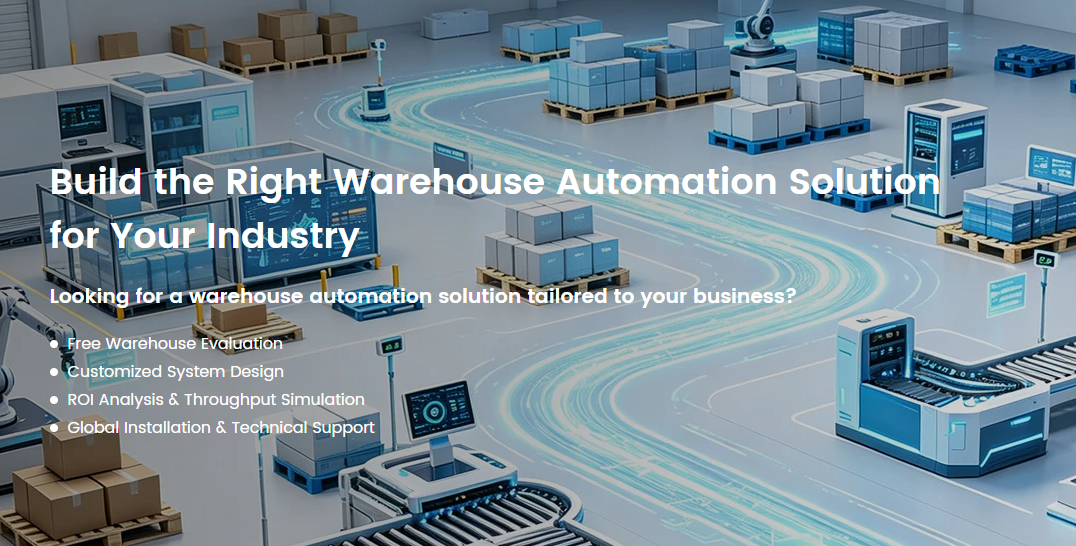
An AS/RS follows a controlled sequence. When goods arrive, an identification point confirms the pallet, tote or carton. Warehouse software assigns a storage location, and the control layer sends a task to the relevant crane, shuttle, lift or conveyor.
The machine carries the load to its assigned position and confirms the movement. When the stock is needed, the process runs in reverse: the system retrieves the load and delivers it to a conveyor, picking station or dispatch area.
A warehouse management system (WMS) usually manages inventory, locations and business tasks. A warehouse control system (WCS) coordinates equipment movements and status. The exact software boundaries vary between projects.
Most systems contain five functional layers:
Buying one automated machine does not automatically create a working AS/RS. The load dimensions, rack tolerances, transfer points, software interfaces and operating rules have to work together.
Learn how a warehouse control system coordinates cranes, shuttles, lifts and transfer equipment within automated storage.
Unit-load systems handle pallets or other heavy load carriers. A stacker-crane AS/RS commonly uses a crane that travels along a rack aisle, raises or lowers a carriage and transfers the load into a storage position.
This layout suits high-bay pallet storage and repeatable load units. The design must account for pallet condition, maximum weight, rack depth, throughput, aisle length and upstream or downstream transport.
A mini-load AS/RS stores smaller loads such as totes or cartons. It can support goods-to-person picking by bringing the required container to a workstation instead of sending an operator through storage aisles.
Container dimensions, item behaviour, order lines, replenishment rules and station capacity are central to the design. Pallet-system assumptions should not be reused for a tote operation.
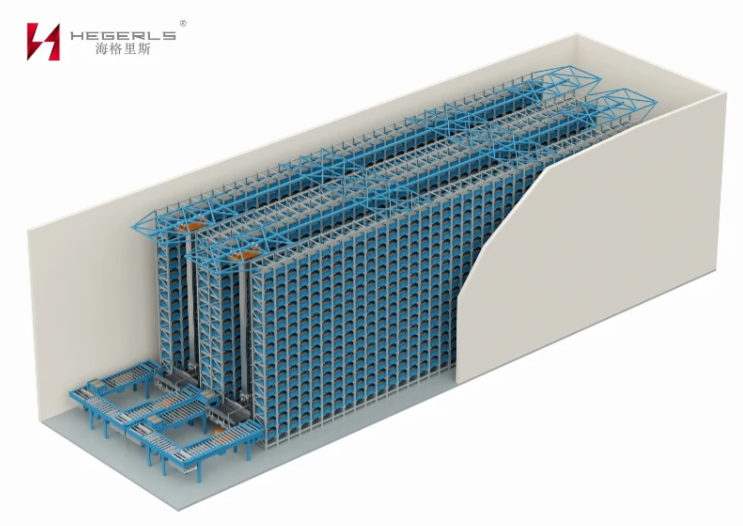
Shuttle systems use vehicles that move within storage lanes or across rack levels. Depending on the design, lifts connect levels and conveyors link the storage block to other processes.
A four-way shuttle system can move in both longitudinal and cross directions within the rack network. Shuttle quantity, lift capacity, traffic control and redundancy all influence total system throughput.
For a closer look at shuttle movement, lifts, traffic control and selection inputs, read our guide to four-way pallet shuttles.
For project selection, continue with our AS/RS and four-way shuttle comparison, which explains why density and throughput must be calculated from the complete layout.
The wider AS/RS category also includes vertical lift modules, horizontal or vertical carousels, cube-storage systems and other robotic storage arrangements. These formats are often used for small parts, tools, cartons or goods-to-person workflows.
They are alternatives within the category, not interchangeable versions of the same design. The best fit depends on what is being stored and how it must move.
A well-matched system can provide several practical benefits:
These are potential outcomes rather than guaranteed percentages. Actual performance depends on the baseline operation, equipment configuration, peak demand, data quality and day-to-day management.
AS/RS deserves consideration when storage or retrieval has become a clear constraint. Typical signs include long travel distances, limited floor space, repeatable pallet or tote flows, high storage volume, frequent retrieval tasks or plans to use more building height.
It may be a poor fit when load dimensions vary without control, inventory data is unreliable, volumes are too low to justify the change, or the building cannot support the proposed structure and equipment. Highly unpredictable processes may need to be standardised before automation is designed.
Compare automated equipment requirements with the basic structure and operating limits in this warehouse pallet rack overview.
Start with operational data, not a preferred machine. A supplier will normally need:
Use this information to compare concepts on system throughput, storage capacity, flexibility, fault recovery, implementation scope and total ownership cost. A machine's top speed on its own says little about how the complete warehouse will perform.
No. AS/RS automates storage and retrieval. Warehouse automation may also cover receiving, transport, picking, packing, sorting and shipping.
No. A WMS manages inventory and workflows, while AS/RS includes the physical and control systems that store and retrieve loads.
Cost depends on the load type, capacity, building work, equipment, software, integration and service scope. A reliable estimate requires project data.
Often, yes, but the building, floor, fire-safety conditions, available height, interfaces and installation plan must be assessed first.
HEGERLS provides automated storage system options that include stacker-crane, mini-load and shuttle-based configurations. Each project is configured around the warehouse, load unit, inventory and required flow rather than a universal equipment package.
To discuss your AS/RS project, send your layout and clear height, load dimensions and weights, SKU and inventory profile, average and peak throughput, temperature conditions, current software and target timeline. These details give the technical team a useful basis for concept and scope discussions.


