HEGERLS Warehouse Automation Solutions & High-Density Storage Systems

 read
read A four-way pallet shuttle is an automated vehicle that carries pallets through a high-density racking grid. Unlike a two-way shuttle that normally travels only along one storage lane, a four-way shuttle can move longitudinally and laterally on the same rack level. Lifts connect different levels, while control software assigns routes and coordinates the shuttle with conveyors, pallet stations and other equipment.
The shuttle is only one part of the system. A complete installation also needs compatible pallets, rails, racking, lifts, transfer stations, sensors, safety controls and warehouse software.
A typical four-way shuttle system includes the following layers:
Every interface matters. A vehicle may perform correctly but still wait because a lift, conveyor or pallet inspection station has become the limiting resource.
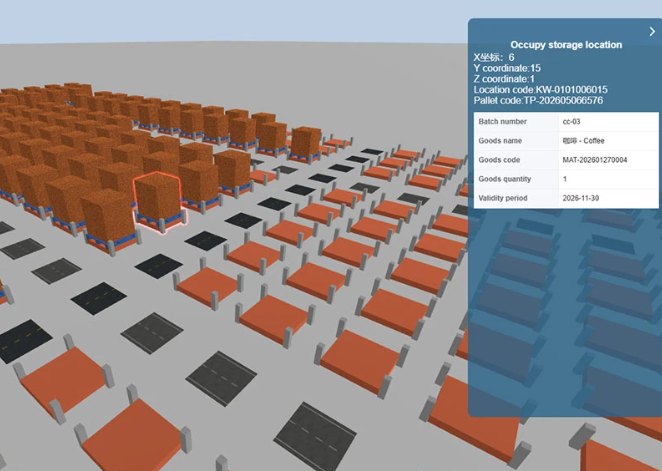
An inbound pallet arrives at a transfer station. The system may read its barcode and check dimensions, weight, overhang or load condition. Loads outside the approved envelope should be rejected or routed for correction before they enter the racking.
The WMS selects an eligible location using inventory rules such as SKU grouping, batch, expiry date, stock rotation and available capacity. The WCS converts that decision into equipment tasks and chooses a route.
If the destination is on another level, a shuttle lift or pallet elevator performs the vertical transfer. Lift quantity, position and cycle time can have a major effect on system flow.
The shuttle moves along the main track, changes direction at an intersection and enters the assigned storage lane. It positions beneath the pallet, raises its carrying mechanism and places the pallet in the selected location.
Sensors confirm completion. The control layer reports the movement, and the WMS updates the inventory record. Retrieval follows the reverse sequence: the shuttle collects the pallet, reaches the transfer point and passes it to a lift or conveyor for dispatch.
Traffic rules prevent vehicles from claiming the same path or intersection. The system also needs procedures for low battery, blocked routes, lost communication, damaged loads and equipment faults.
Both technologies support dense pallet storage, but they organize movement differently.
|
Comparison point |
Two-way pallet shuttle |
Four-way pallet shuttle |
|
Horizontal movement |
Usually within one deep lane |
Longitudinal and lateral movement across a level |
|
Repositioning |
Often moved between lanes by forklift or handling equipment |
Can change lanes through the rail network |
|
Typical automation level |
Semi-automated or integrated automated layouts |
Usually designed as a coordinated automated system |
|
Shared resources |
Forklifts, lane entrances and shuttle carts |
Lifts, intersections, transfer stations and shuttle fleet |
|
Best-fit question |
Do we need dense storage within defined lanes? |
Do we need flexible routing across a dense storage grid? |
Neither format is universally better. The decision depends on SKU depth, access rules, peak flow, labour model, building geometry and investment scope.
Four-way systems can reduce the number of fixed machine aisles, but usable density is project-specific. It is shaped by:
Compare concepts using usable pallet positions within the approved building and safety layout. A theoretical rack-block density is not the same as operating storage capacity.
Throughput is a system result. Important variables include:
Ask suppliers to model the same peak profile, storage map, order mix and availability assumptions. A vehicle's top speed cannot prove completed pallet movements per hour for the entire warehouse.
The design is worth evaluating for pallet operations that need high-density storage, variable routing or phased capacity expansion. Possible applications include manufacturing buffers, food and beverage storage, cold rooms, distribution centres and third-party logistics facilities.
It may be a weak fit where pallets are badly standardised, loads frequently exceed the approved envelope, inventory data is unreliable or the required flow is too low to justify the controls and equipment. Highly diverse products may also reduce the benefit of deep lanes if each lane holds too little stock.
Prepare a project data set covering:
Use those inputs to compare rack capacity, end-to-end throughput, flexibility, fault recovery and total ownership cost.
It can be part of an AS/RS when racking, lifts, transfer equipment, controls and software work together to store and retrieve pallets automatically.
It moves horizontally within the rack level. A lift normally provides vertical transfer for the shuttle, the pallet or both, depending on the design.
No. Extra vehicles help only until lifts, intersections, conveyors or stations become bottlenecks.
Potentially, but FIFO depends on rack access, lane allocation and inventory rules. It must be confirmed in the proposed layout and software logic.
Often it can, subject to the building, floor, clear height, fire protection, power, interfaces and installation access.
HEGERLS presents a four-way shuttle system with racking, lifts, WMS and WCS as project-configured parts of an automated pallet warehouse. The final configuration should be based on verified load and flow data rather than a standard shuttle count.
To discuss a concept, send your layout and clear height, pallet dimensions and weights, SKU and inventory profile, average and peak pallet movements, operating temperature, current software and target timeline through the project enquiry page.