HEGERLS Warehouse Automation Solutions & High-Density Storage Systems

 read
read For decades, warehouses were considered the quietest part of the supply chain — rows of storage racks, forklifts moving between aisles, and employees manually counting inventory.
Today, this traditional image is rapidly changing.
With artificial intelligence giving warehouses the ability to analyze and optimize operations, digital twins creating virtual replicas of physical facilities, and warehouse robots taking over repetitive handling tasks, smart warehousing is becoming a key driver of global supply chain transformation.
In 2026, the smart warehousing industry is entering a new stage of development. The focus is no longer simply on increasing storage capacity, but on creating intelligent, connected, and highly efficient warehouse ecosystems through:
Artificial intelligence (AI)
Automated Storage and Retrieval Systems (ASRS)
Warehouse Management Systems (WMS)
Warehouse Control Systems (WCS)
Autonomous Mobile Robots (AMR)
Automated Guided Vehicles (AGV)
Digital twin technology
Driven by the global growth of e-commerce, intelligent manufacturing, and sustainable logistics, smart warehousing is shifting from an optional upgrade to a strategic infrastructure investment.
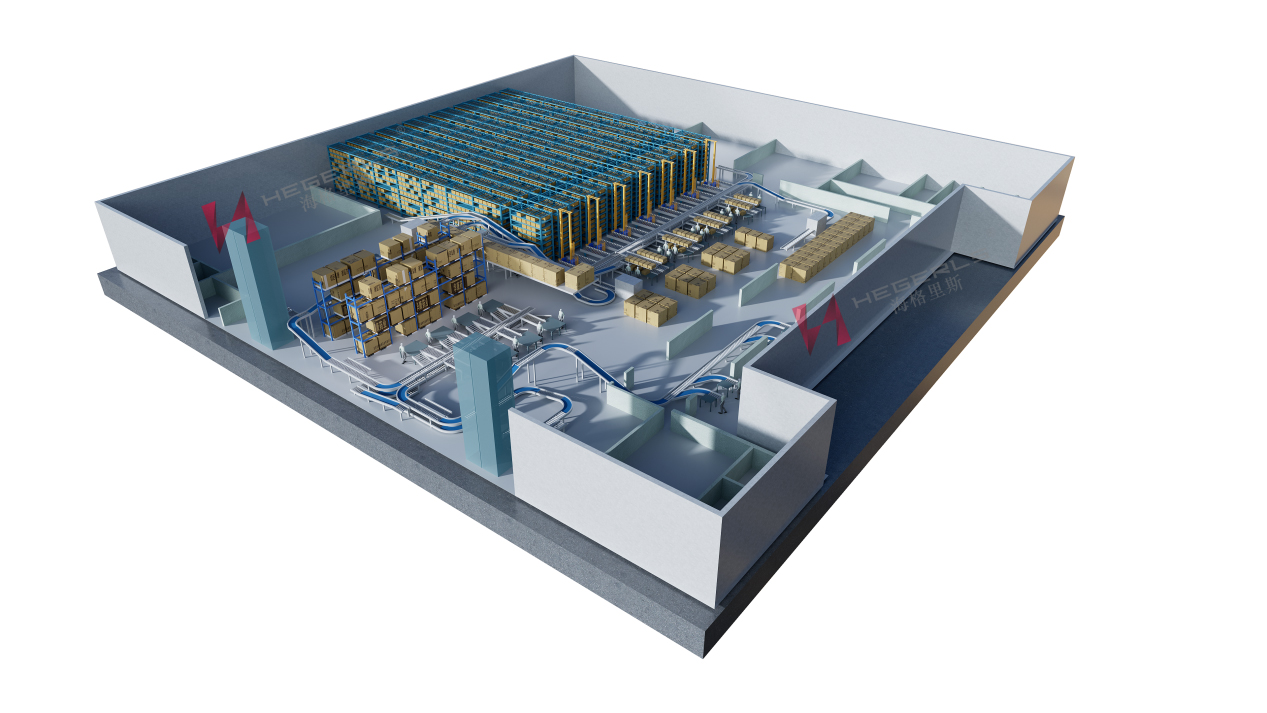
The smart warehousing industry in 2026 is experiencing a transition from large-scale expansion to high-quality growth.
The smart warehousing industry in 2026 is experiencing a transition from large-scale expansion to high-quality growth.
In the early development stage, companies mainly focused on increasing warehouse capacity and improving basic storage efficiency. However, as market competition intensifies, businesses are now paying more attention to:
Storage density improvement
Operational efficiency
Labor cost reduction
Inventory visibility
Flexible automation
Energy efficiency
Traditional warehouse expansion is slowing, while high-value automated warehouse solutions continue to grow rapidly.
Key growth areas include:
Automated high-bay warehouses
Intelligent cloud warehouses
Cold chain smart warehouses
Pharmaceutical automated storage
New energy industry warehouses
Cross-border e-commerce fulfillment centers
The industry is moving from:
“Building more warehouses” → “Building smarter warehouses”
Modern enterprises are no longer satisfied with simply storing and moving goods.
The new generation of warehouses must provide:
Real-time inventory visibility
Automated material handling
Intelligent order fulfillment
Accurate warehouse management
Flexible production support
Data-driven decision making
Different industries are creating new demands:
High-frequency orders and massive SKU volumes require:
Goods-to-person picking systems
AMR robots
Shuttle storage systems
Intelligent sorting solutions
Smart factories require:
Automated material supply
Production line integration
Just-in-time delivery
Digital warehouse management
Strict traceability requirements drive demand for:
Automated storage systems
Temperature-controlled warehouses
Intelligent inventory tracking
Low-temperature environments require:
High-density storage
Reliable automation equipment
Unmanned warehouse operation
Smart warehousing is no longer only an equipment investment. It has become a complete system capability integrating hardware, software, and intelligent algorithms.
In 2026, AI is becoming the “brain” of smart warehouses.
AI technology is being applied in multiple warehouse scenarios:
AI algorithms analyze:
Inventory turnover rates
Storage location utilization
Order patterns
Equipment operation data
to optimize warehouse layouts and storage strategies.
AI enables:
Robot route optimization
Traffic management
Dynamic task allocation
Real-time congestion avoidance
Instead of solving problems after they occur, AI enables:
Prediction → Optimization → Automatic Adjustment
Warehouses can proactively identify:
Inventory risks
Equipment failures
Operational bottlenecks
and take preventive actions.
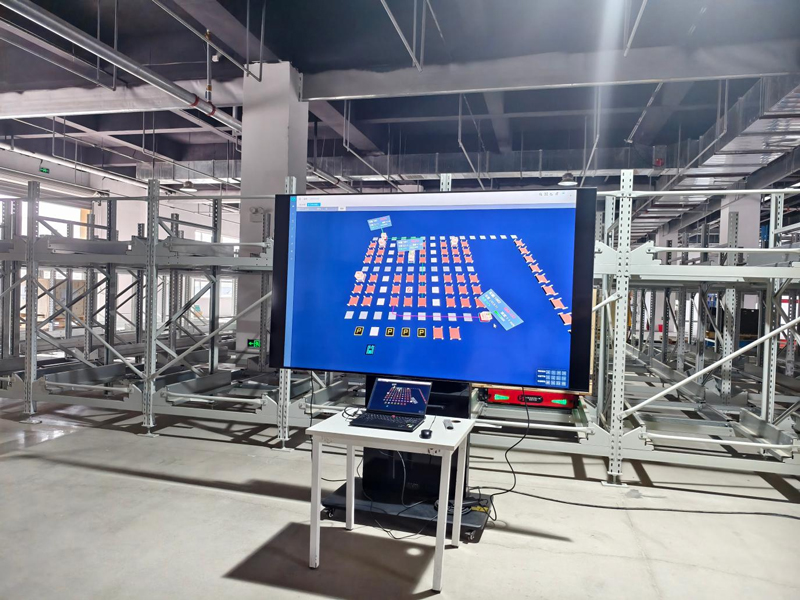
Digital twin technology is becoming one of the most important technologies in smart warehousing.
A digital twin warehouse creates a virtual model of the physical warehouse, allowing operators to monitor, analyze, and optimize operations in real time.
Modern digital twin systems integrate:
3D visualization
Real-time equipment monitoring
Data analysis
Simulation optimization
Intelligent decision support
Through digital twins, warehouse managers can achieve:
Complete visibility of warehouse operations
Faster troubleshooting
Better resource allocation
Improved system efficiency
The future warehouse will not only operate physically but also have a digital “mirror” that continuously improves performance.
Warehouse robots are becoming essential components of modern logistics systems.
Major robotic technologies include:
AMRs use:
LiDAR navigation
SLAM technology
AI algorithms
to move freely in dynamic environments without fixed routes.
Applications include:
Goods-to-person picking
Material transportation
Production line feeding
AGVs provide reliable transportation solutions for:
Manufacturing logistics
Pallet handling
Warehouse transfer
High-density storage systems using shuttle robots can significantly improve:
Storage capacity
Retrieval efficiency
Space utilization
The development direction is moving toward:
Single-machine automation → Multi-robot intelligent collaboration
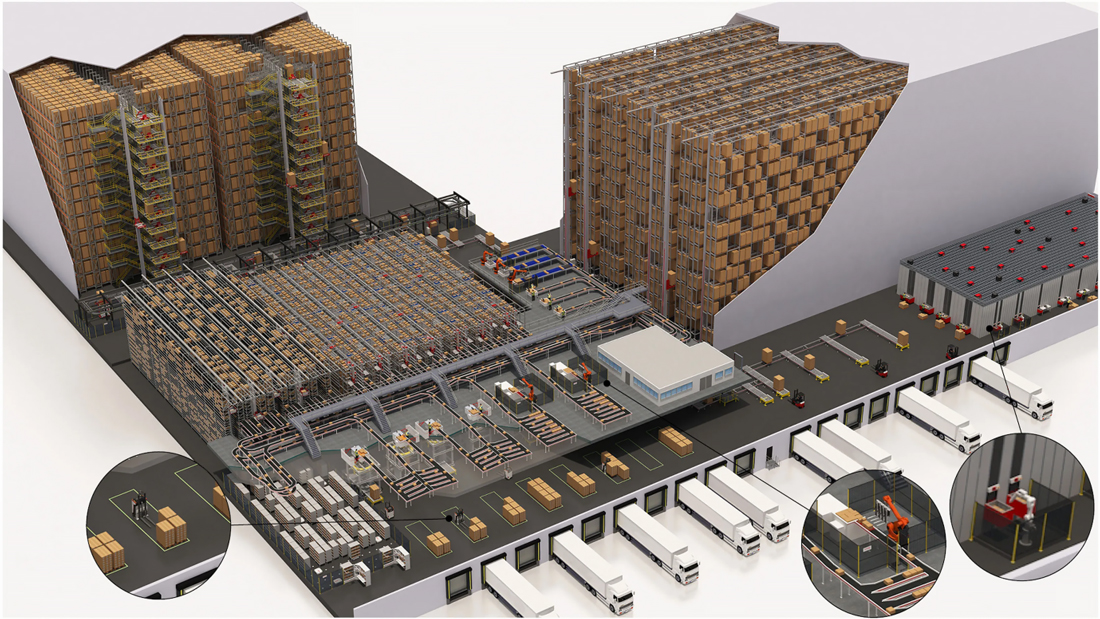
Hardware alone cannot create a truly intelligent warehouse.
Modern smart warehouses rely on integrated software platforms:
WMS manages:
Inventory information
Storage locations
Order processing
Warehouse operations
WCS coordinates:
Robots
Conveyors
ASRS systems
Sorting equipment
Smart warehouses are increasingly connected with:
ERP systems
MES platforms
Supply chain management systems
This integration creates a fully connected intelligent logistics ecosystem.
Sustainability is becoming a key factor in warehouse development.
Future smart warehouses focus on:
Energy-efficient automation equipment
Lower carbon emissions
Intelligent energy management
Reduced manual labor dependence
Examples include:
Low-power warehouse robots
Energy-saving conveyor systems
Optimized storage density
Reduced warehouse footprint
Green warehousing is transforming from a corporate responsibility into a competitive advantage.
Although smart warehousing has strong growth potential, several challenges remain.
Smart warehouses require integration between:
Mechanical systems
Software platforms
Robotics
Industrial networks
System compatibility remains a major challenge.
Automation projects require investment in:
Equipment
Software
Infrastructure
Maintenance capability
Companies need accurate ROI analysis before implementation.
The industry needs more professionals with combined knowledge of:
Warehouse operations
Automation technology
AI algorithms
Software systems
Different equipment suppliers and software systems still face compatibility issues.
Future development requires stronger industry standards.
Smart warehouses will continue evolving from single automated equipment to fully connected intelligent warehouse ecosystems.
Automation will cover:
Receiving
Storage
Picking
Sorting
Shipping
Digital twin platforms will become essential tools for:
Warehouse planning
Operation monitoring
Performance optimization
AI will increasingly replace manual experience-based decisions.
Future warehouses will automatically optimize:
Inventory placement
Robot scheduling
Warehouse workflows
Lightweight automation solutions will become more popular, including:
AMR systems
Modular ASRS
Shuttle storage systems
allowing more companies to adopt smart warehouse technologies.
With the development of manufacturing, e-commerce, and global supply chains, smart warehouse solutions will continue expanding worldwide.
Markets with strong potential include:
Southeast Asia
Middle East
India
Latin America
Europe
In 2026, warehouses are no longer simple storage locations.
They are becoming intelligent logistics hubs powered by:
AI
Robotics
Automation systems
Digital twins
Intelligent warehouse software
The future warehouse will be:
More efficient
More flexible
More sustainable
More intelligent
The transformation from traditional storage to smart warehousing represents not only a technological upgrade but also a fundamental change in how global supply chains operate.
For companies seeking higher efficiency, lower operating costs, and stronger competitiveness, investing in smart warehouse automation is becoming a strategic choice for the future.
Smart warehousing is not the future — it is already reshaping the present.

